Project overview
Introduction
Sydney Water delivers safe, reliable water to more than 5 million people, but using it wisely is up to everyone. Even though our dams are almost full, drought will return. People aren’t always naturally motivated to conserve water, and while Sydney Water already offers tips and services, they’re now seeking more effective ways to encourage proactive water-saving behaviours. Acting now will benefit the environment and help us prepare for the next inevitable drought.
Objective
To design a solution to promote smarter habits, using BJ Fogg’s model to make water-saving actions sustainable.
Team
This project was completed in a team of three designers:
Soudeh Geranpayeh, Hose Ruiz, and Lineu Ripoll.
My role: UX Researcher & UI/UX Designer
I contributed to:
Planning and conducting user research (survey & interviews)
Synthesising insights and defining user segments
Shaping the design direction using behavioural principles
Designing key user flows and UI screens
Conceptual client:
Sydney Water
Tools Used
Figma for design
Google form for research
Canva & Whimsical for visuals
Time frame
2-week sprint
Research
What I noticed early on
We started with a business analysis to understand Sydney Water’s current approach to encouraging people to use water responsibly and adopt water-saving habits. While Sydney Water offers useful resources like online tips, smart meters, and education programs, these rely on people actively seeking them out. And even if they do, they are not motivating enough to change behaviour in the long run.
We identified gaps in Sydney Water’s existing approaches, like:
They don’t proactively reach out to people.
Their resources don’t reach enough users.
There’s little ongoing support to keep people motivated.
So the solution needed to be more engaging, accessible, and effective to make a real impact.
Learning from what already exists
We looked at sustainability and utility tracking apps to find out what works best.
Key takeaways:
Simple UI with data visualisations improves user retention.
Personalised goals keep users engaged.
Many apps lacked actionable steps beyond tracking data.
A simple model that changed everything
This is where BJ Fogg’s Behaviour Model helped shape our thinking.
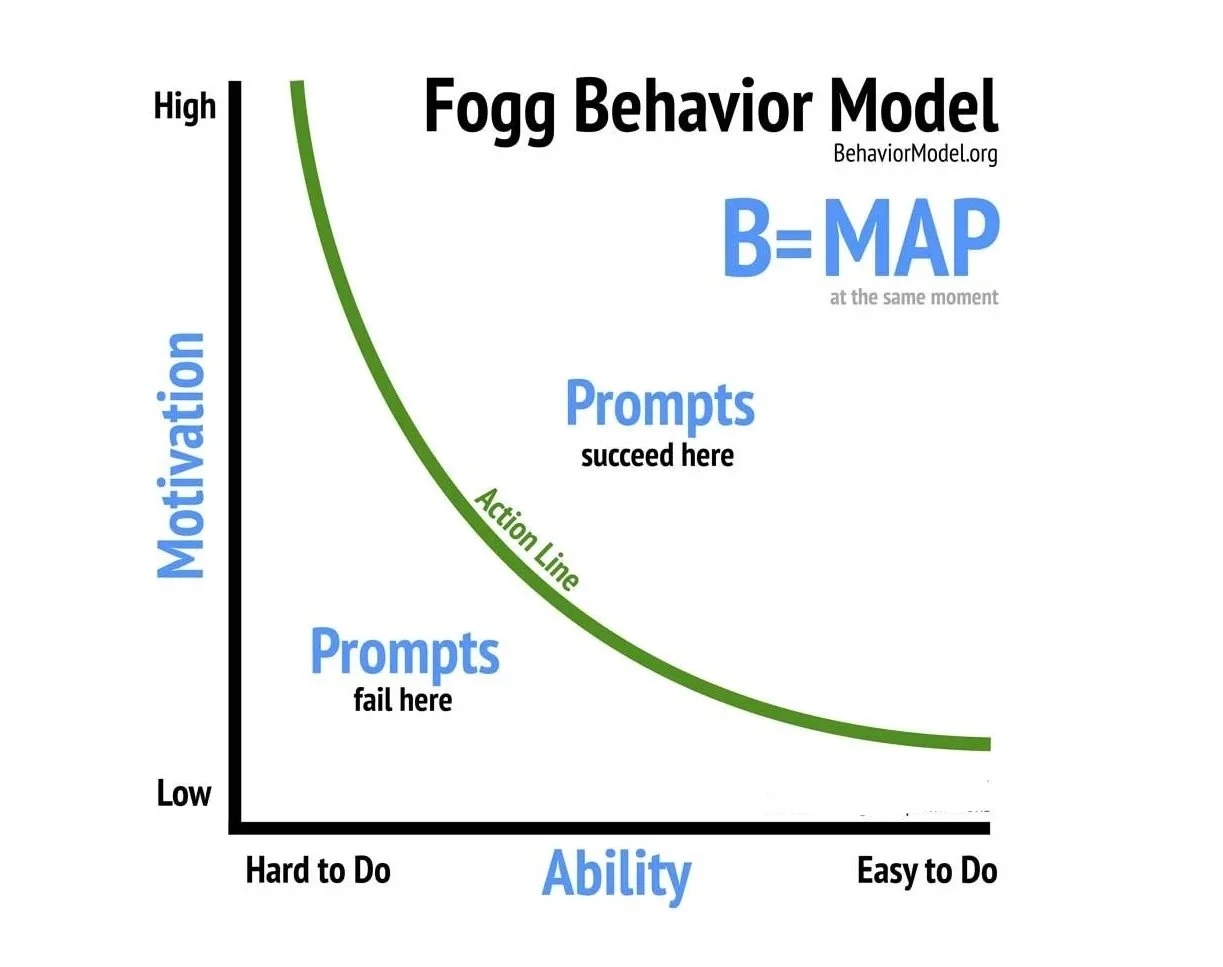
It explains that behaviour happens when three things come together:
Motivation (people need a reason)
Ability (it needs to feel easy)
Trigger (a reminder at the right time)
With these elements in mind, our next step was to understand how motivated people are to save water.
Understanding User Behaviour
Next, we ran a survey with 14 participants to gauge people’s motivation to save water. So the survey began with a simple question: Do you make an effort to save water? If they said yes, we explored their actions, reasons, and goals. If they said no, we uncovered the barriers and what might encourage them to start.
Some interesting things came up:
Almost everyone said they try to save water in small ways. (91%)
Their main motivation was environmental concern—not money
Most people didn’t actually know how much water they use
So the problem wasn’t only motivation, it was clarity and confidence too.
Who are we designing for?
After analysing the survey responses and interviews, we identified one primary user archetype and two minor archetypes.
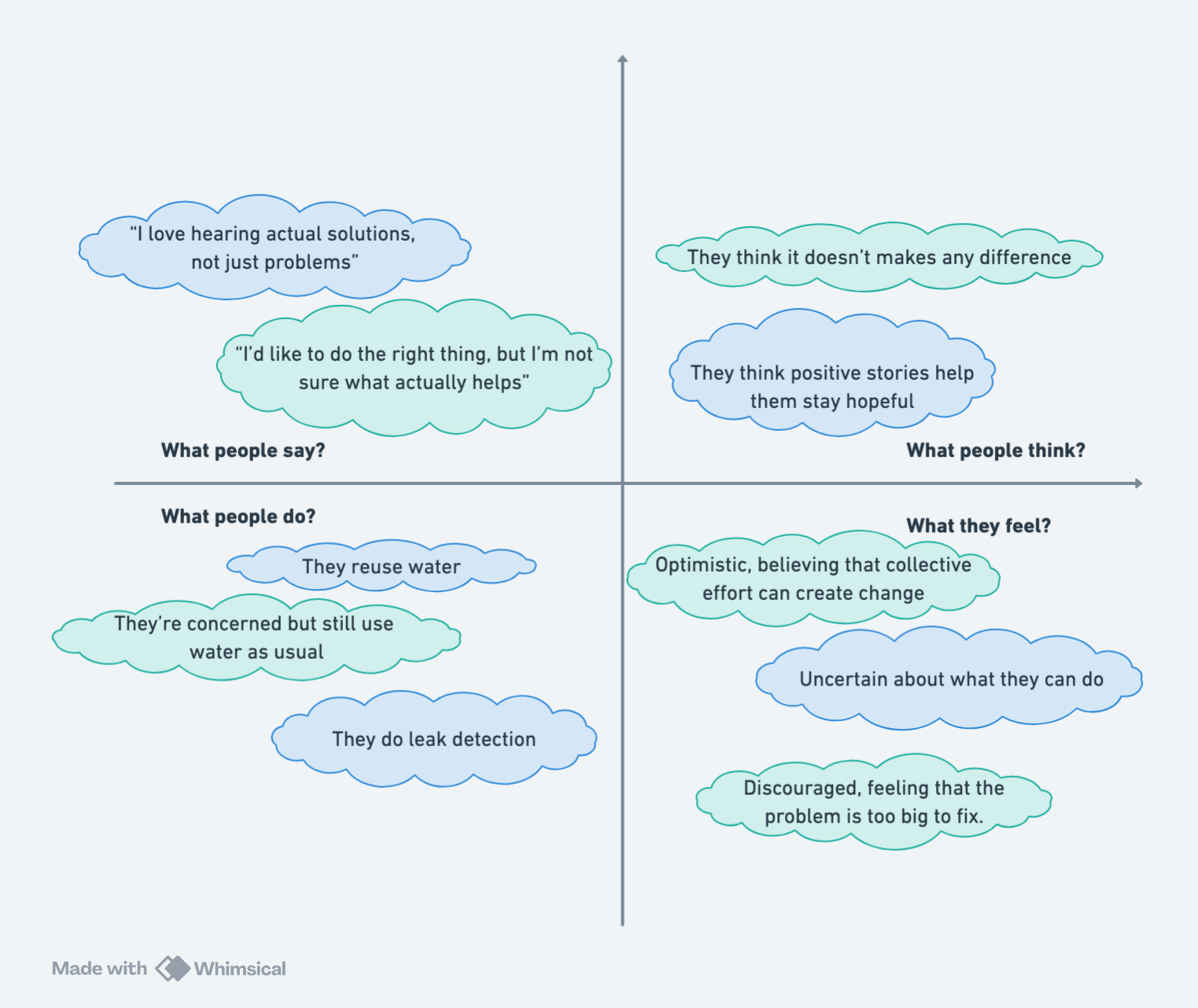
1. The unsure but willing (91%, primary user archetype)
They want to do the right thing, but don’t know what actually helps. They feel overwhelmed and need simple, clear guidance.
Motivation level: Low
Pain points:
Unsure which water-saving actions are truly effective
Overwhelmed by too much or unclear information
Lacks direction and cannot track progress
Needs:
Guided, bite-sized actions
Educational content that is engaging and not overwhelming
Positive reinforcement and feedback to stay motivated
2. The already committed (6%)
This group is already mindful of their water use and actively looks for ways to reduce their impact. They are motivated by sustainability and are willing to adopt new habits when supported and guided. They save water by taking shorter showers, using efficient appliances, reusing water, and following recommended tips.
Motivation level: High
Pain points:
Sometimes feels overwhelmed by generic environmental crisis news
Has no clear way to see the real impact of their efforts
Feels frustrated when their contributions seem invisible
Needs:
Feedback loops that clearly show progress
Opportunities to share and celebrate achievements
Simple, smart, easy-to-follow water-saving advice
3. . The sceptic
Motivation level: Very low
The Doubter represents a small group—around 3%— who are aware of water-saving conversations but are sceptical about their personal impact. They question whether individual actions matter or whether the problem is more about the actions of big industries or government decisions. Their lack of motivation comes from uncertainty.
Insight
Residents want to conserve water but often feel overwhelmed, unsure where to start, and uncertain whether their actions make a difference. They need simple, guided steps and clear impact feedback to feel confident, motivated, and supported in building sustainable water-saving habits.
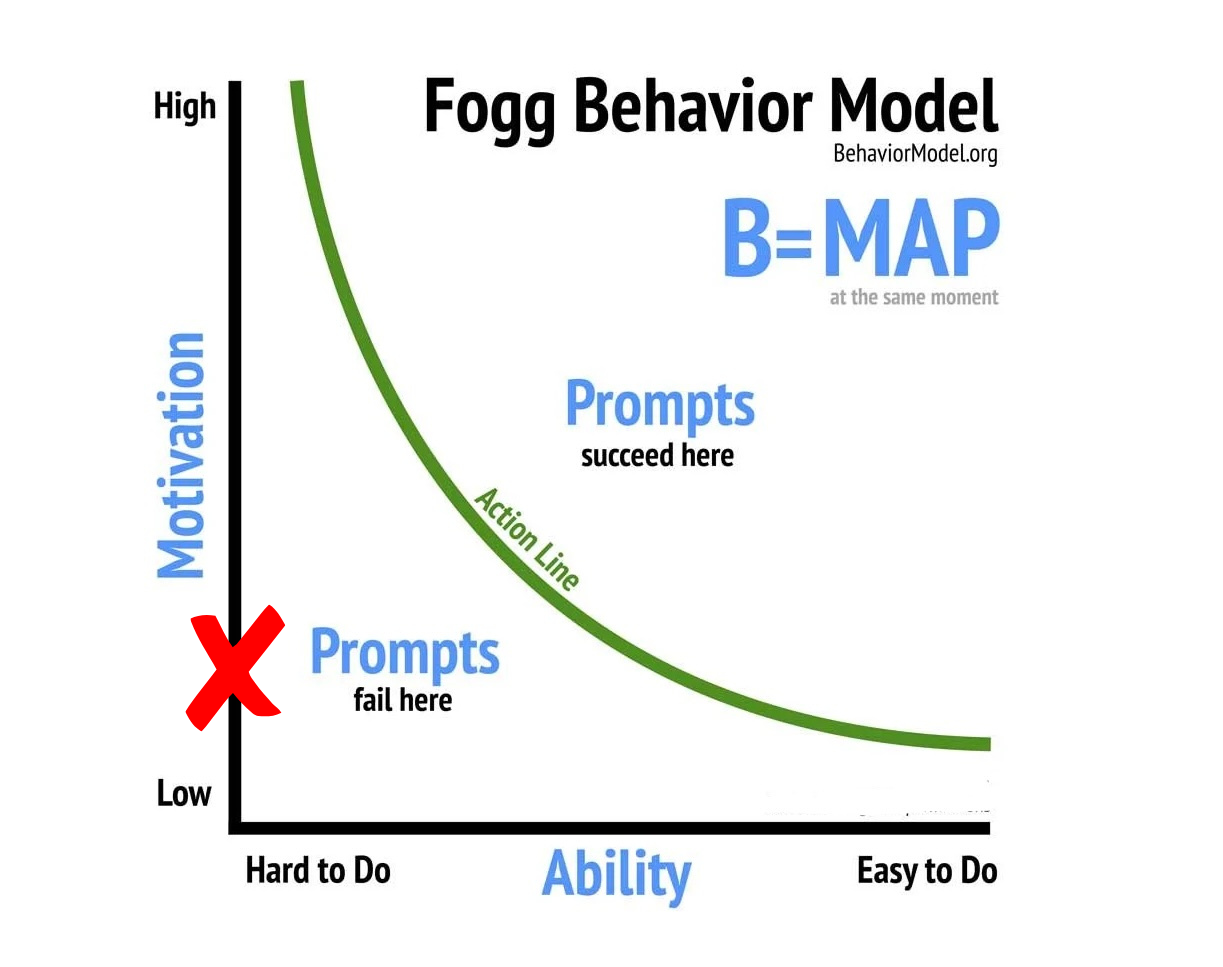
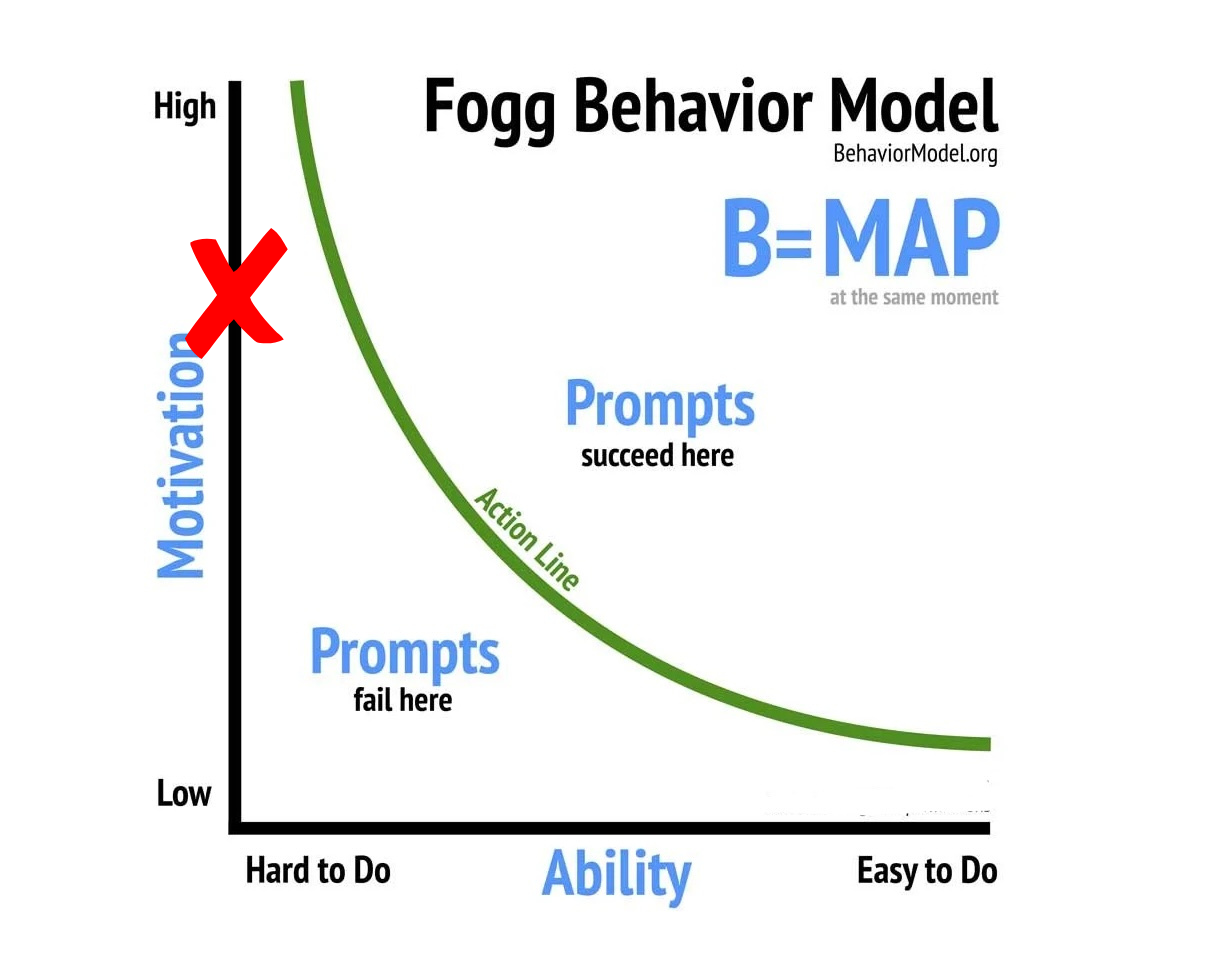
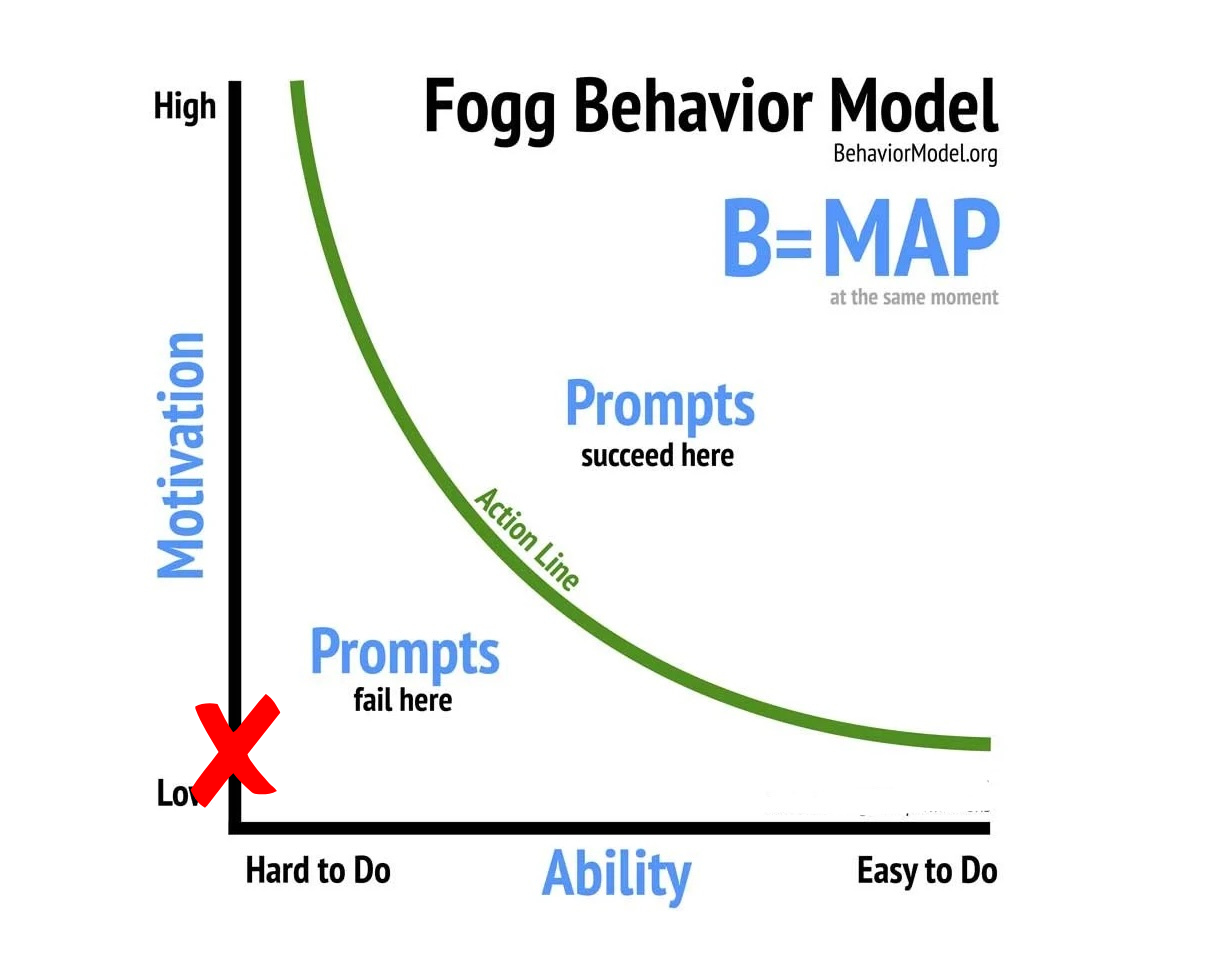
Finding the sweet spot
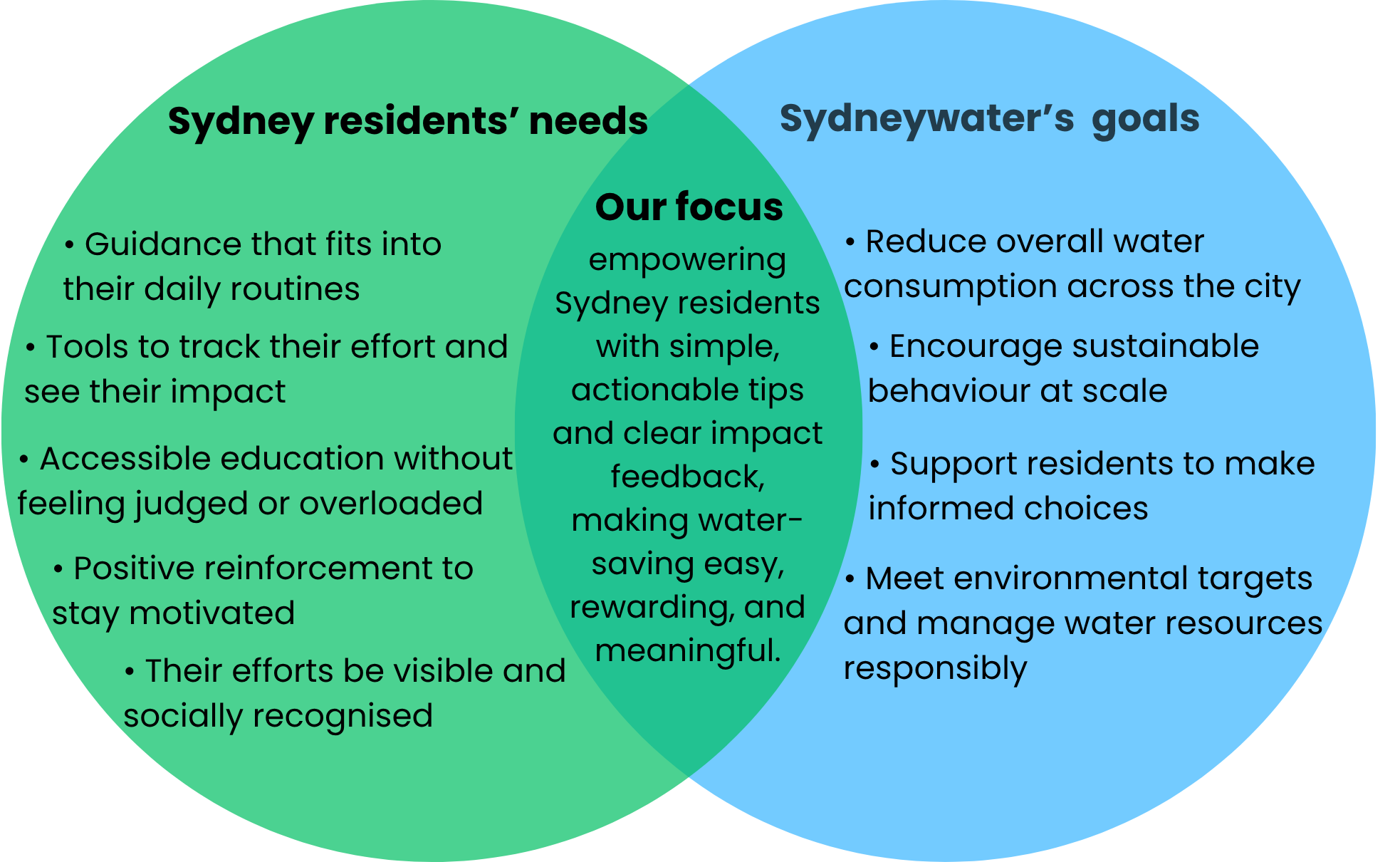
We want people to experience

Clarity
Empowered
Part of the community
Ideation & Concept
Design Direction
Throughout the process, we explored a range of ideas to create a solution that could drive lasting behaviour change, going beyond basic water usage tracking and leak alerts. Guided by BJ Fogg’s Behaviour Model, we focused on simplifying actions so they feel easy, practical, and achievable within everyday routines.
This direction was strongly influenced by our primary user group, the unsure but willing users who are motivated to do the right thing but often lack clarity and confidence. For this group, the challenge isn’t intent, but execution. Therefore, we prioritised designing low-effort, practical actions that reduce friction and make it easier to act consistently.
Turning the idea into something real
With that in mind, we started shaping a solution focused on:
Making actions easy and doable
Supporting users continuously
Showing real impact over time
Instead of asking people to change everything at once, the goal was to help them build better habits through small, consistent steps that naturally fit into their daily lives.
Introducing Ripple
Ripple is a mobile app designed to help people build better water habits over time. It goes beyond just tracking—it supports behaviour. Here’s how:
Suggests simple, practical water-saving actions.
Tracks how much water users save.
Rewards progress with “Earth Bonus” points.
Sends smart reminders at the right time.
Shows long-term environmental impact.
Allows users to set goals and track progress.
Creates a sense of community through shared achievements.
The goal was simple: Make saving water feel easy, rewarding, and meaningful.
Sketches
Here are the early sketches of the main screens of the app.
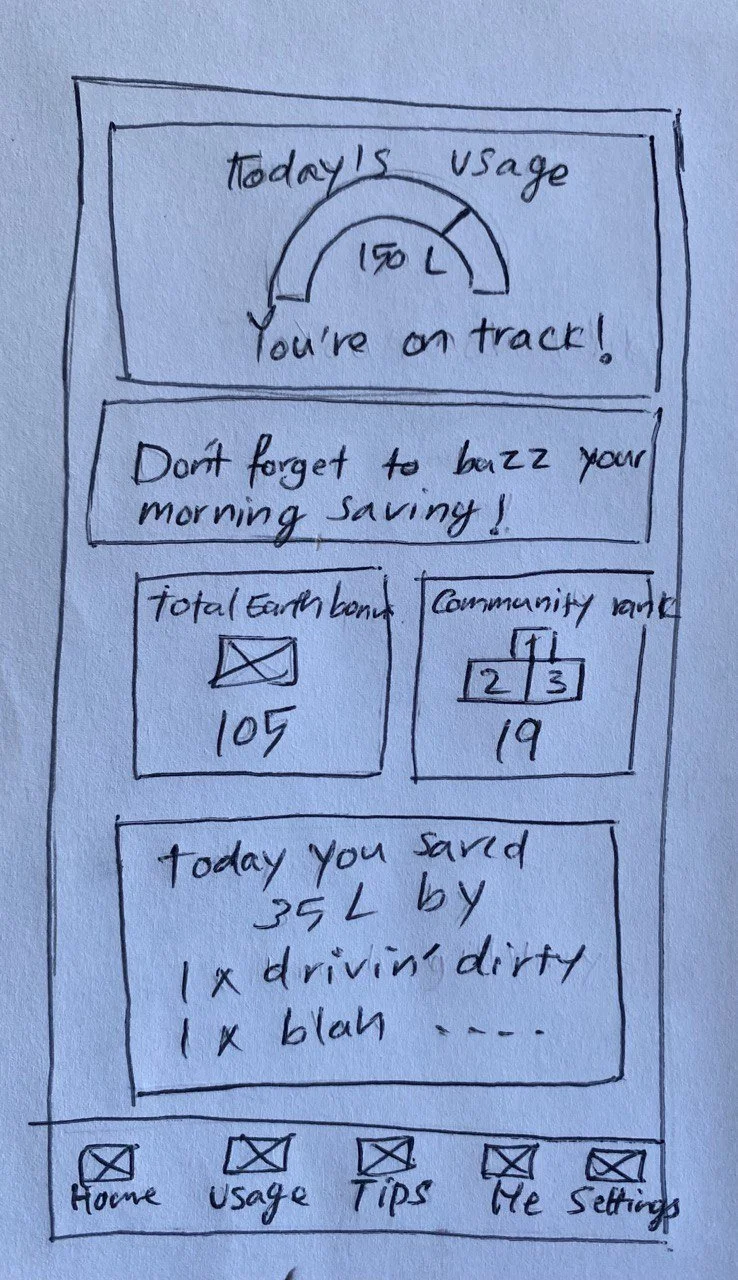
Dashboard screen
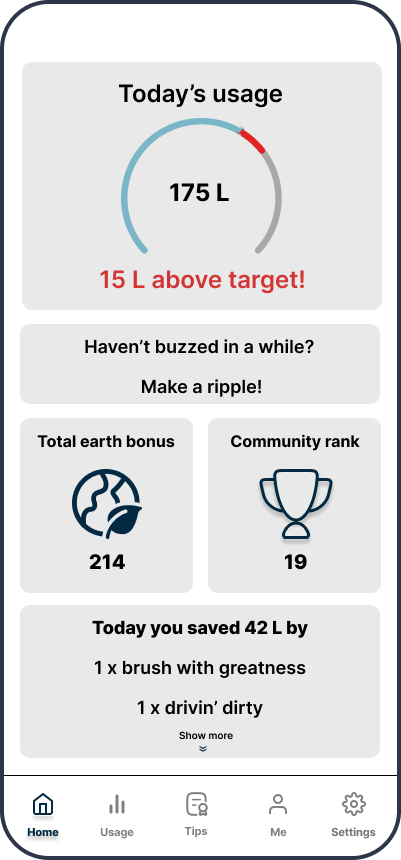
Showing key features at a glance: today’s water usage progress, total Earth Points, reminder message, community rank, and daily water savings from completed actions.
Usage screen
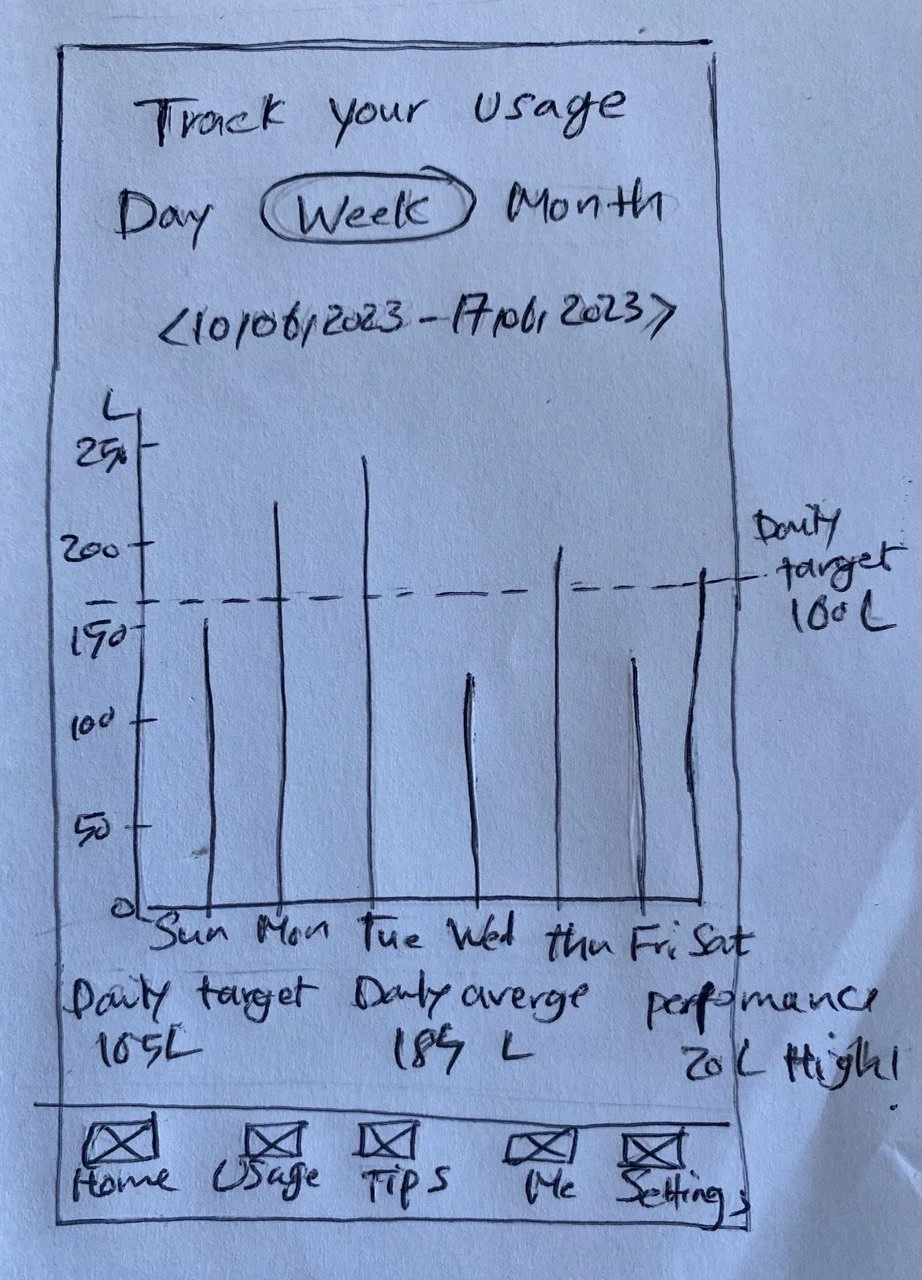
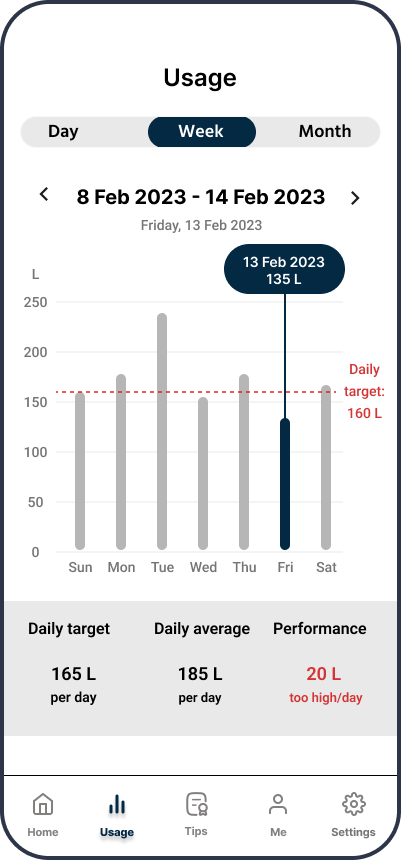
Visualises water consumption by day, week, and year. Displays daily average, target, and performance to help users stay aware and on track.
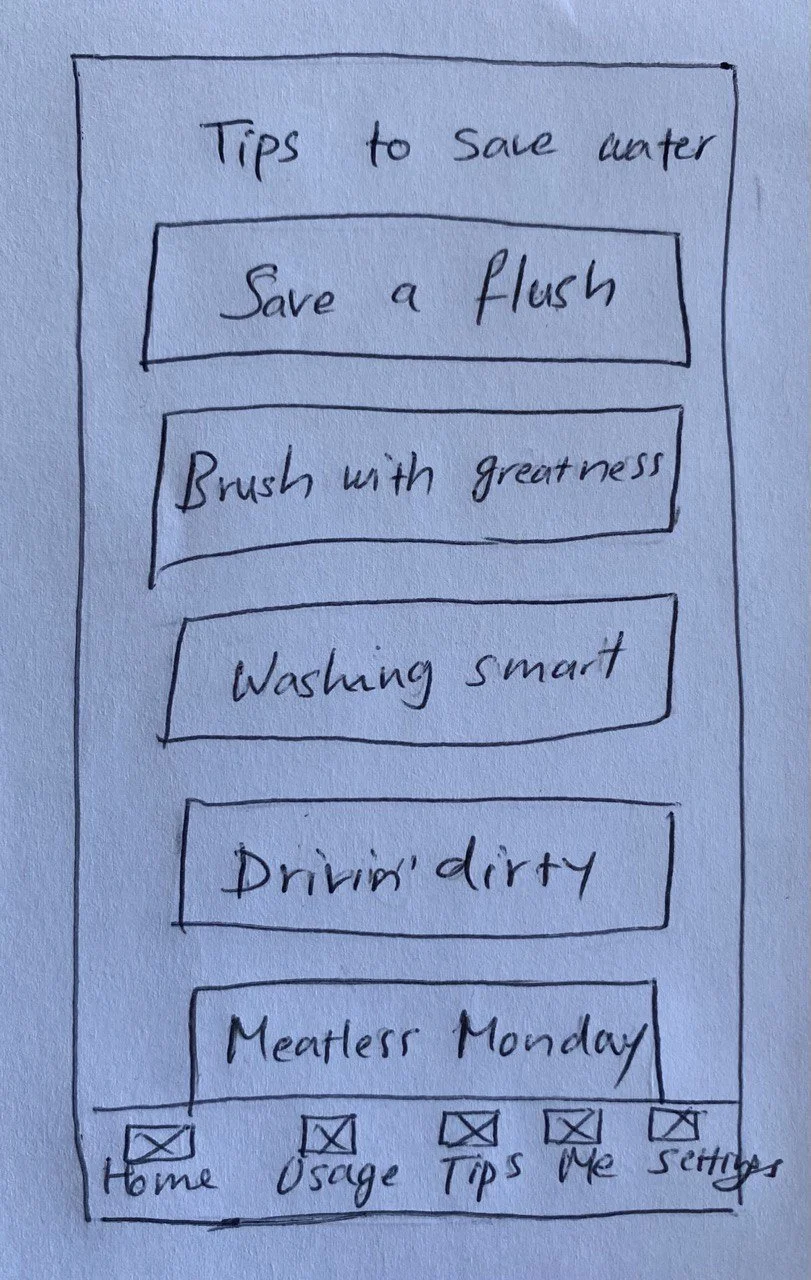
Water saving tips screen
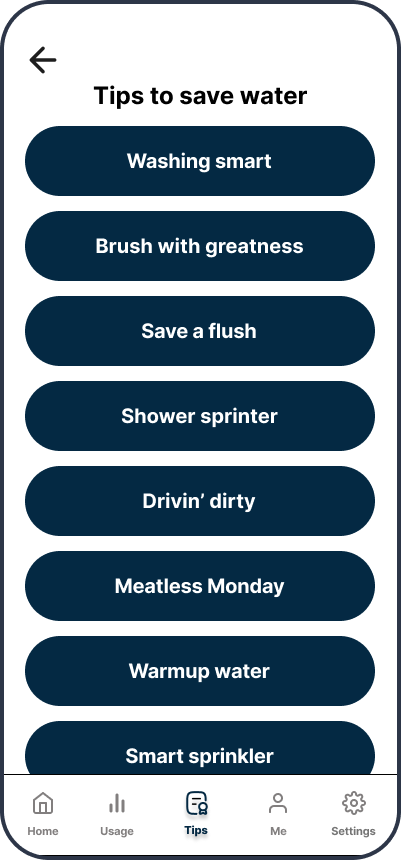
Displays a range of practical, water-saving actions as interactive buttons. Each tip has a fun, memorable name.

Buzz screen
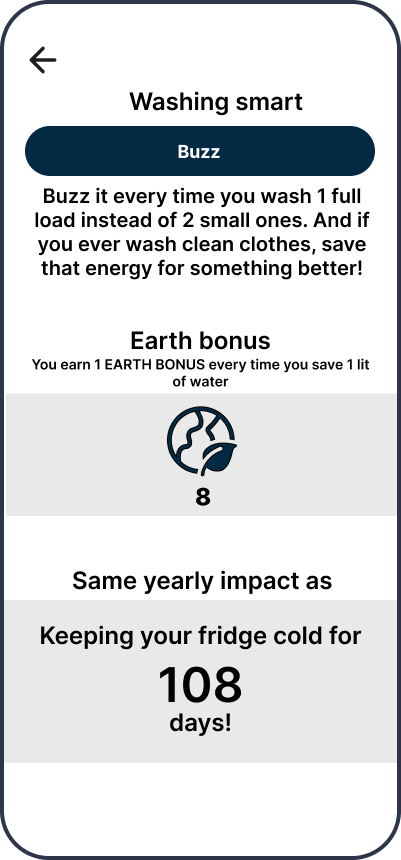
Provides context and motivation for each water-saving action. Explains when to buzz, how many points are earned, and the long-term impact of the action.
Design & Prototyping
I kept the design clean and minimal to avoid overwhelming users.
Clear layouts for easy understanding
Colour cues (blue = efficient, red = high usage)
Simple interactions that fit into daily life
Here are some of the key screens:
Link to prototype
Feedback
After testing the prototype with 6 participants, the feedback was encouraging.
People said:
“Seeing my impact over time really motivates me to keep saving water.”
“The app’s tone is friendly and encouraging, not preachy.”
“I love how the app doesn’t make me feel guilty. It’s light-hearted but still makes me think.”
There were also useful suggestions:
“There’s a lot of text. I’d like to see more graphics.”
“I wish I could see my water bill in the app too.”